Dehumidifier vs Heated Airer: Which Dries Clothes Better?
Both cost pennies an hour and both beat a tumble dryer on the bill. A heated airer warms the clothes; a dehumidifier dries the air around them. The difference matters for your walls as much as for your washing.
The short answer
A heated airer is the cheaper thing to buy and dries thin items quickly. A dehumidifier dries a whole load evenly and removes the water from the room instead of leaving it in the air. If your home already has condensation or mould, the dehumidifier is the better choice. Used together, they are faster than either alone.
Dehumidifier vs heated airer at a glance
Here is how the two compare for a normal load of washing.
| Dehumidifier + ordinary airer | Heated airer | |
|---|---|---|
| Typical power | About 150-350 W | About 200-300 W |
| Cost per hour at about 25p/kWh | Roughly 4-9p | Roughly 5-8p |
| Where the water goes | Into the tank | Into the room air |
| Thick items (towels, jeans) | Dry evenly | Need turning; slow where fabric does not touch the bars |
| Risk of condensation | Reduces it | Can increase it in a closed room |
| Other uses | Damp and mould control all year | None |
Where does the water go?
A load of washing holds around two litres of water after the spin. A heated airer turns that into vapour, and the vapour stays indoors until it finds a cold surface: a window, an outside wall, the back of a wardrobe. That is how drying clothes indoors feeds mould. A dehumidifier collects those two litres in its tank. You pour them down the sink.
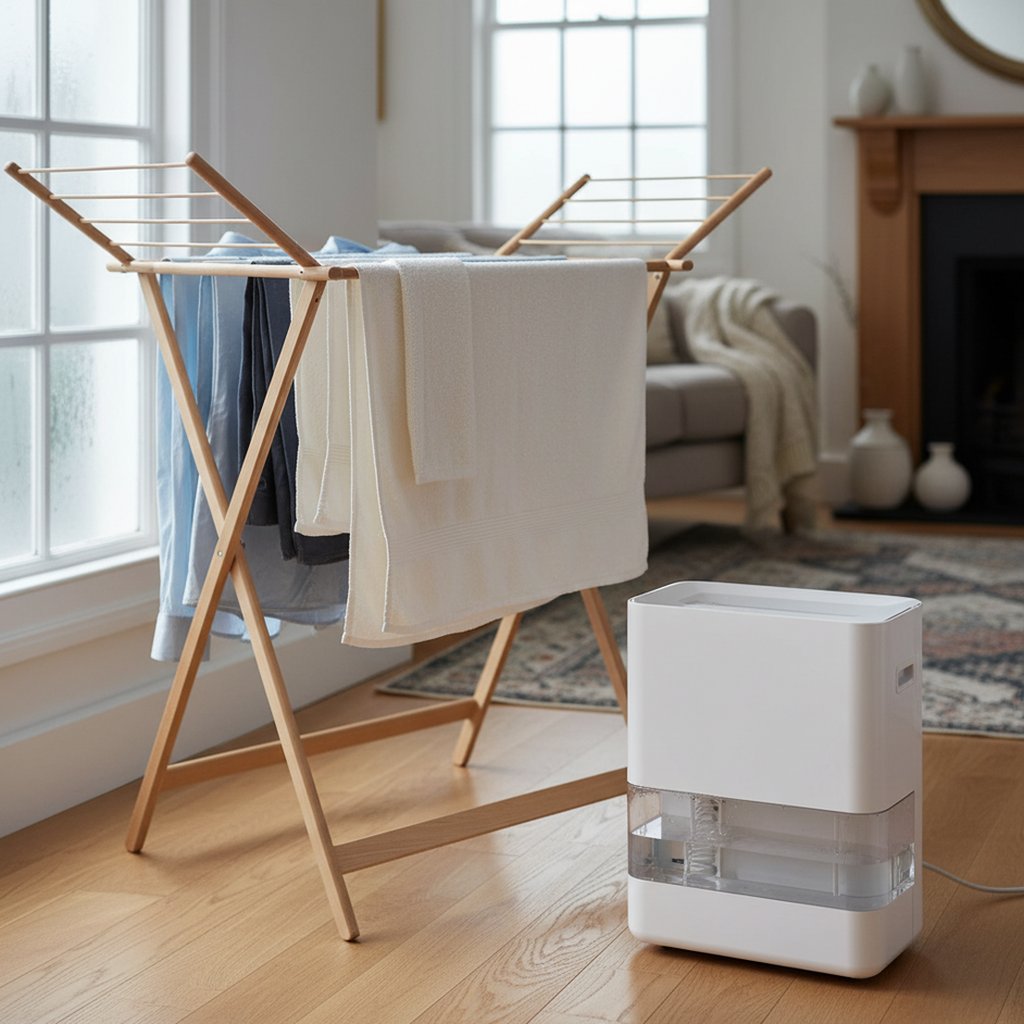
Speed
A heated airer dries what touches the bars: T-shirts and underwear in a few hours, thick towels much longer unless you turn them or add a cover. A dehumidifier in laundry mode, in a closed room, typically dries a full airer in four to six hours, thick items included, because dry air reaches every surface.
Running cost
They are closer than most people expect. Both draw a few hundred watts. A 12L dehumidifier such as the Meaco Arete One 12L runs at about 3p an hour by the maker's figure; a typical heated airer costs a little more. Neither comes near the cost of a tumble dryer: see dehumidifier vs tumble dryer.
How to set either one up properly
Whichever you choose, the method matters. Spin the load at the highest speed the fabrics allow. Hang items with gaps between them. Use the smallest room you can and shut the door. With a dehumidifier, place it a metre from the airer with the outlet pointing at the clothes and switch on laundry mode. With a heated airer, drape a cover or a sheet over the top to hold the warmth, and turn thick items halfway through.
Which rooms suit which
A heated airer is fine in a room with an extractor fan or an open trickle vent, where the vapour has a way out. In a bedroom or living room with cold outside walls, it is the riskier choice: the moisture ends up on those walls. A dehumidifier suits any closed room, and the drier the room gets, the faster the clothes finish.
Purchase price
A heated airer is the cheaper purchase, with the price rising with size, tiers and a cover. A dehumidifier costs more on day one, then works for the rest of the house all year, which a heated airer cannot.
The best of both
If you have both, run them together: heated airer under the clothes, dehumidifier beside it, door and window shut. The airer releases the moisture faster and the dehumidifier removes it. If you are buying only one and your home is at all damp, buy the dehumidifier: our picks for drying clothes are here.

Meaco MeacoDry Arete One 12L
12 litres/day · 4.6/5

Pro Breeze 20L OmniDry WiFi Dehumidifier
20 litres/day · 4.5/5

Meaco MeacoDry Arete Two 20L
20 litres/day · 4.4/5
Ready to compare models? See our best dehumidifier for drying clothes comparison →
Frequently asked questions
Is a dehumidifier or heated airer cheaper to run?
They are close: both draw a few hundred watts, which is roughly 4 to 9p an hour. A small 12L dehumidifier is usually the cheaper of the two per hour.
Do heated airers cause damp?
They can. The water leaving the clothes stays in the room air and condenses on cold surfaces unless you ventilate or run a dehumidifier.
Can I use a dehumidifier with a heated airer?
Yes, and it is the fastest low-cost way to dry clothes indoors. Keep the door and window closed so the dehumidifier only has to dry that room.
Which dries clothes faster?
For a full mixed load, a dehumidifier in laundry mode in a closed room, typically four to six hours. A heated airer is quick on thin items and slow on thick ones.