Dehumidifier vs Tumble Dryer for Drying Clothes: Which Is Cheaper?
By Priya Shah, reviewed by James Whitfield · Updated
With UK energy prices where they are, more people are drying laundry indoors with a dehumidifier instead of a tumble dryer. Here's how the two actually compare on cost, speed and practicality.
Running cost: dehumidifier wins by a wide margin
A 20L compressor dehumidifier typically draws 200-350 watts, versus 2,000-3,000 watts for a standard tumble dryer — roughly 8-10x less power for the same job. Based on a 22-24p/kWh electricity rate, drying a load with a dehumidifier in a closed room usually costs somewhere around 15-30p, against £1-£1.50 or more for a full tumble dryer cycle.
Dehumidifier vs tumble dryer at a glance
Here is how the two compare on the points that matter most when you choose between them.
| Dehumidifier + airer | Tumble dryer | |
|---|---|---|
| Power draw | About 200-350 W (typical 20L compressor model) | About 2,000-3,000 W |
| Time per load | Roughly 4-6 hours in a closed room | Roughly 60-90 minutes |
| Fabric care | Gentle: no heat or tumbling wear | Heat and tumbling can shrink or wear fabrics |
| Other uses | Tackles condensation, damp and mould | Dries clothes only |
| What you need | A closed room and a clothes airer | Space, plus venting or a condensate tank depending on type |
Drying speed: tumble dryer wins, but not by as much as you'd think
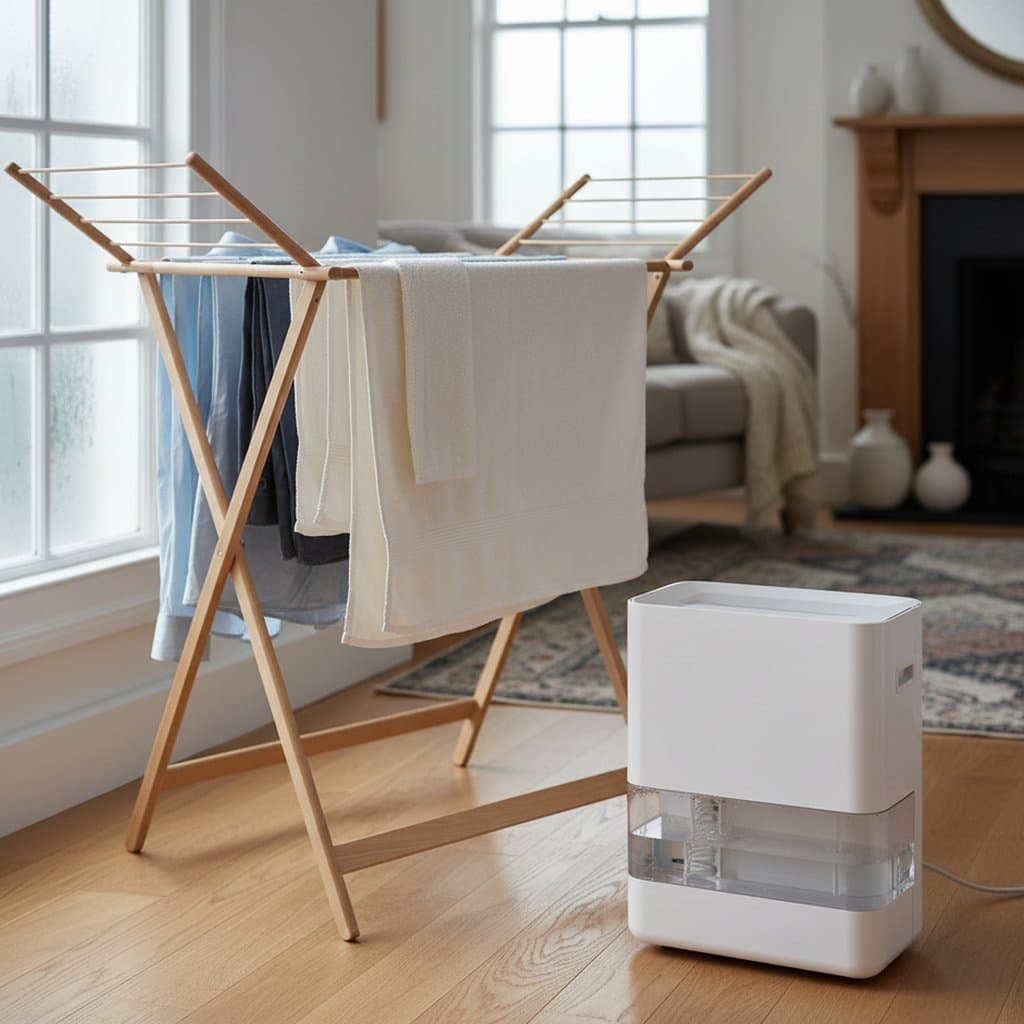
A tumble dryer will dry a load in 60-90 minutes. A dehumidifier with a dedicated laundry mode, like the Meaco Arete Two 20L or the Pro Breeze 20L OmniDry, placed next to a clothes airer in a closed room, will typically dry a full load in 4-6 hours — slower, but still same-day, and it runs unattended while you get on with your day.
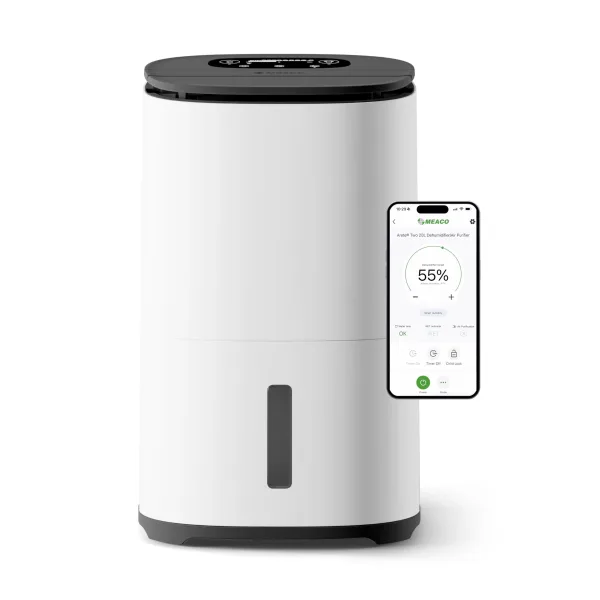
Meaco MeacoDry Arete Two 20L
20 litres/day · 4.4/5
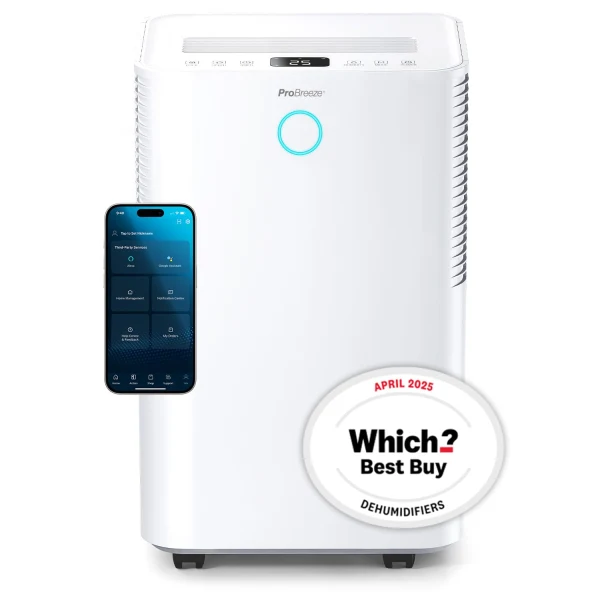
Pro Breeze 20L OmniDry WiFi Dehumidifier
20 litres/day · 4.5/5
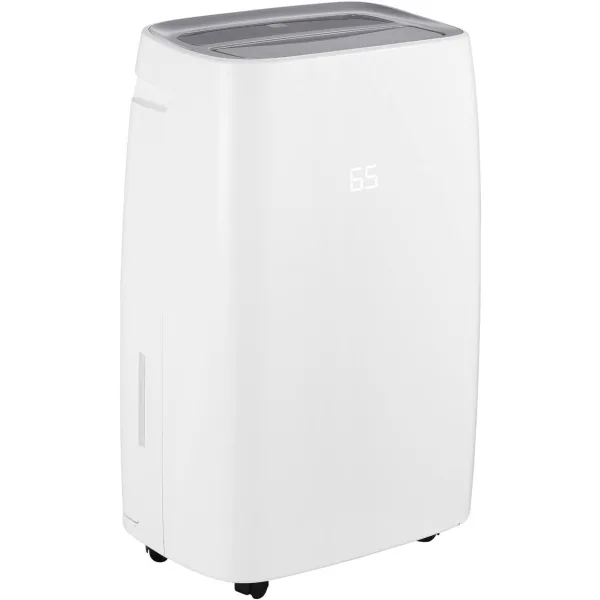
electriQ 40L Smart Laundry Dehumidifier
40 litres/day · 4.2/5
Tumble dryer types: vented, condenser and heat pump
Not every tumble dryer costs the same to run. A vented dryer blows warm, moist air outside through a hose and is usually the thirstiest. A condenser dryer collects the water in a tank and needs no hose, but still uses a lot of energy. A heat pump dryer recycles its heat and uses far less electricity, at the cost of longer cycles and a higher purchase price. If you already own a heat pump dryer, the running-cost gap narrows. A dehumidifier still wins on fabric care and on its second job of controlling damp, which a dryer cannot do.
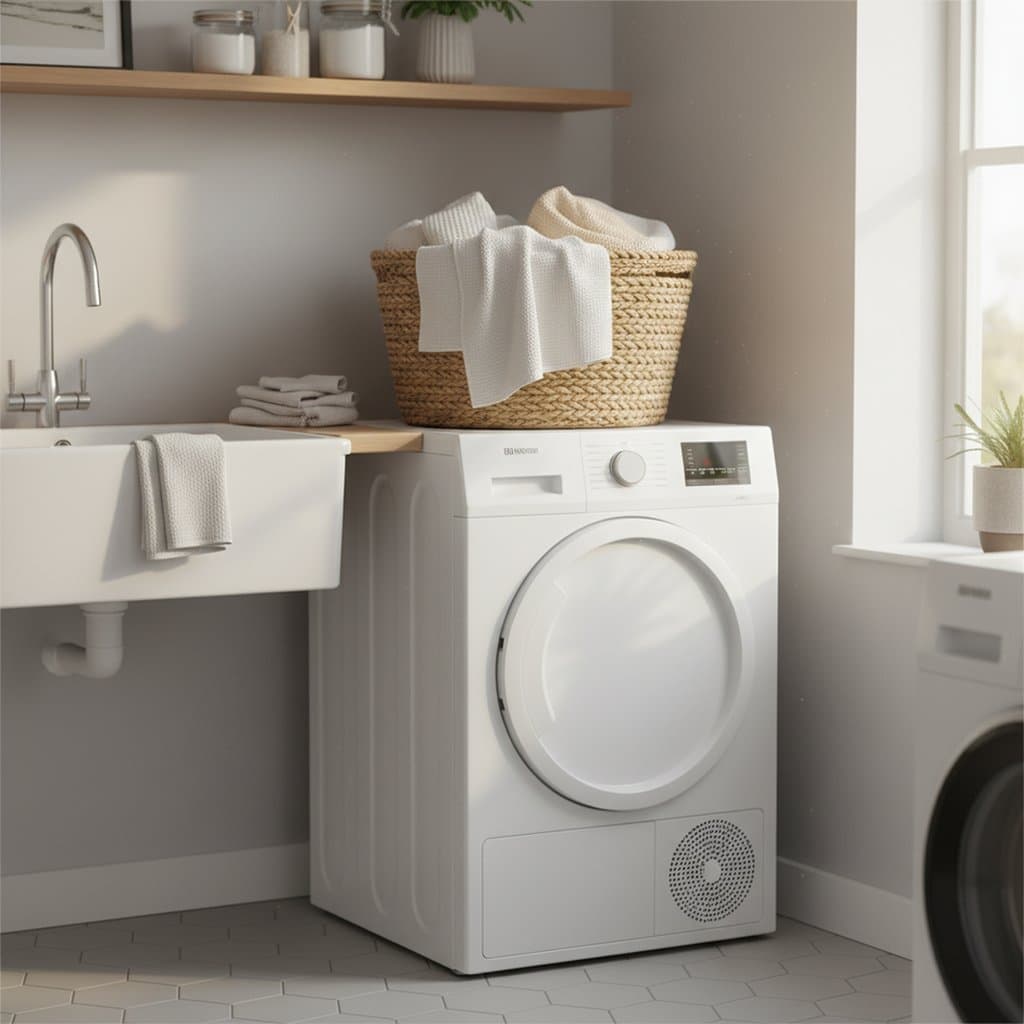
Fabric care and shrinkage
Air-drying with a dehumidifier is far gentler on clothes than tumble drying — no heat damage, no shrinkage, no extra wear from tumbling. If you regularly dry delicates, wool or anything that shrinks in a tumble dryer, this alone can be worth the switch.
How to dry clothes faster with a dehumidifier
The method matters as much as the machine. A few habits make a big difference to drying time: Use one closed room. Shut the door and window so the unit only has to dry the air in that room. Space the clothes out. Hang items on an airer with gaps between them rather than bunching them up, so air reaches every layer. Spin first. A good wash-machine spin removes a lot of water before the dehumidifier even starts. Switch on laundry mode. It runs the fan harder and holds humidity low until the load is dry. Mind the tank. On a long cycle the tank can fill, so empty it or use the continuous drainage option if your model has one.
The dual-purpose advantage
A tumble dryer only dries clothes. A dehumidifier dries clothes and tackles condensation, damp walls and mould the rest of the time it's not running laundry mode — see our guide to the best dehumidifiers for drying clothes. If your home also struggles with damp, that dual use makes the dehumidifier the better value purchase overall, not just for laundry.
When a tumble dryer still makes more sense
If you need same-day drying every single day, have a large family generating multiple loads daily, or don't have a closed room to dedicate to air-drying with a dehumidifier running, a tumble dryer's speed advantage will matter more than the running-cost saving. For most households drying 3-5 loads a week, though, the dehumidifier route works out both cheaper and gentler on clothes.
Ready to compare models? See our best dehumidifier for drying clothes comparison →
Frequently asked questions
How much cheaper is a dehumidifier than a tumble dryer to dry clothes?+
Roughly 5-8x cheaper per load in electricity cost — a dehumidifier draws around 200-350W versus 2,000-3,000W for a tumble dryer, translating to somewhere around 15-30p per load versus £1-£1.50+ for tumble drying.
Do I need a special dehumidifier for drying laundry?+
Not strictly, but a model with a dedicated laundry mode — which runs at full power for a set number of hours then shuts off automatically — is noticeably more effective and convenient than a standard humidity-target mode for this specific job.
Will drying clothes indoors with a dehumidifier cause damp?+
No — that's the point of using a dehumidifier rather than just air-drying on a rack. A dehumidifier actively removes the moisture the wet clothes release into the air, which is what actually causes damp and mould if you air-dry laundry indoors without one.
Is it safe to dry clothes indoors?+
Yes, as long as the moisture does not stay in the air. Drying in a closed room with a dehumidifier running removes the water as it evaporates, whereas drying on radiators with nothing extracting the moisture can push humidity up and encourage condensation and mould.
Can I use a dehumidifier and a tumble dryer together?+
Yes. Many households use the dehumidifier for everyday loads and keep the tumble dryer for the occasions when they need something dry within an hour or two.