Awaab's Law Explained: Damp, Mould and Your Rights as a Tenant or Landlord
Awaab's Law sets repair deadlines for damp and mould in rented homes. Here is who it covers, what landlords must do, and the health risks of waiting.
What is Awaab's Law?
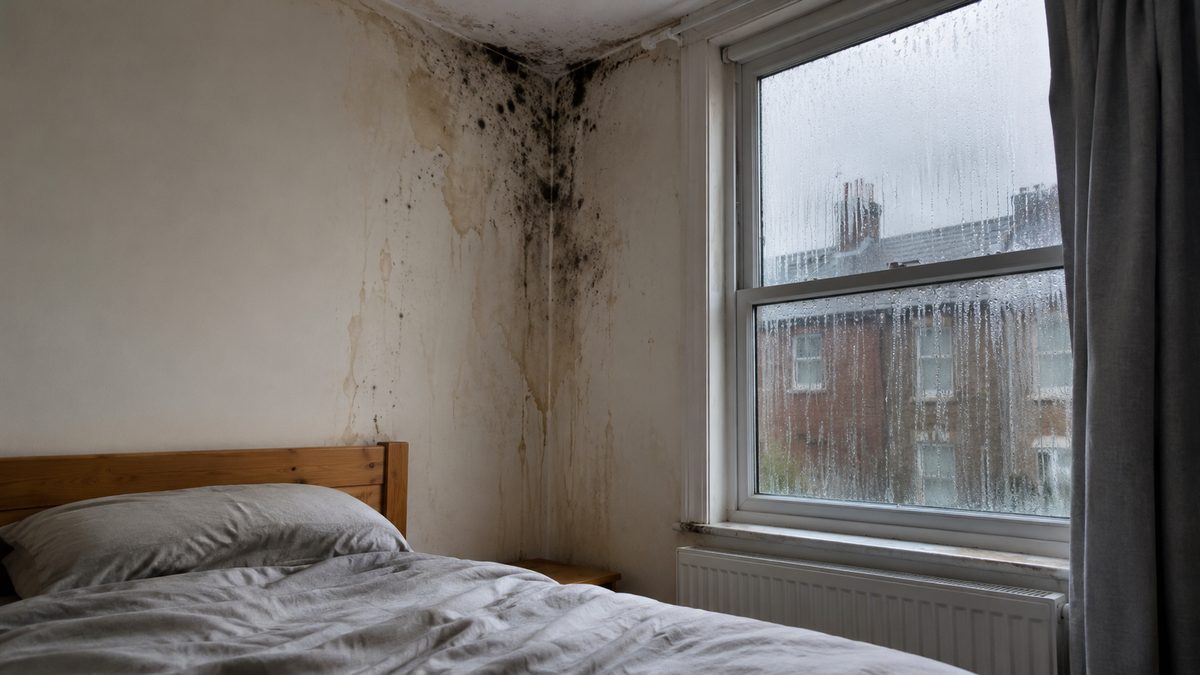
Awaab's Law is named after Awaab Ishak, a two-year-old who died in 2020 from a respiratory condition caused by long-term exposure to mould in his family's rented flat in Rochdale. The coroner's findings in 2022 led the government to bring in legal deadlines for landlords to investigate and fix serious damp and mould. In England the law came into force for social housing (council and housing association homes) on 27 October 2025. It stops landlords from leaving a damp or mould complaint sitting in a queue: there are fixed time limits, and a tenant can take action if they are missed.
The deadlines landlords must meet
For social landlords, the clock starts when the landlord is told about the problem, or finds out some other way. The main time limits are in the table below. They are summarised from the GOV.UK guidance for social landlords and tenants (linked under Sources), so check the latest wording there before relying on a specific date in a dispute.
| Situation | What the landlord must do | Deadline |
|---|---|---|
| Emergency hazard (immediate risk to health or safety) | Investigate and make the home safe | Within 24 hours |
| Damp or mould that poses a significant risk of harm | Investigate the cause | Within 10 working days of the report |
| After the investigation | Give the tenant a written summary of the findings | Within 3 working days |
| Significant hazard confirmed | Make the home safe | Within 5 working days of the investigation concluding |
| Further work needed to fix the cause | Start the remaining work | Within 5 working days where possible, and no later than 12 weeks |
What about private renters?
Awaab's Law does not yet apply to the private rented sector in England. For social landlords, Phase 2 starts on 30 November 2026 and adds further hazards beyond damp and mould, such as excess cold and heat, falls and electrical risks. The government has said it intends to extend Awaab's Law to private landlords, but secondary legislation is still needed and no start date has been confirmed. That does not leave private tenants without rights today. Landlords must still keep a home fit for human habitation under the Homes (Fitness for Human Habitation) Act 2018, and councils can act on serious damp and mould under the Housing Health and Safety Rating System (HHSRS). Scotland, Wales and Northern Ireland have their own rules, so this guide covers England only.
What can damp and mould do to your health if you leave it?
Mould thrives where moisture sits, and the spores it releases can be breathed in. According to the UK government's health guidance for housing providers, damp and mould mainly affect the airways and lungs. Exposure can cause cough, wheeze and shortness of breath, raise the risk of airway infections, trigger or worsen allergies and asthma, and irritate the eyes and skin (including eczema and rashes). The guidance also says that some people exposed to damp and mould may experience poor mental health. In the most severe cases it can cause serious illness and, rarely, death. The risk grows the longer it goes on. A small patch that is cleaned and dealt with early is a very different thing from a damp room that is ignored for months, which is exactly what Awaab's Law was written to stop. If anyone in the home has breathing problems that seem to be linked to damp or mould, speak to your GP.
Who is most at risk?
Damp and mould are a risk for everyone, but some people are more likely to become ill. The government's health guidance names: - Children and young people - Older people - Pregnant women and people who have recently given birth - People with asthma, allergies or other lung or heart conditions - People with a weakened immune system, who are also more vulnerable to fungal infections If any of these apply to your household, treat damp and mould as a health issue rather than an annoyance, and report it to your landlord in writing as soon as you spot it.
Whose responsibility is it: landlord or tenant?
Government health guidance says that advice to tenants must never replace fixing the underlying causes, and that being blamed for damp and mould is itself harmful to tenants' mental health. The landlord is responsible for the cause of the problem: leaks, rising or penetrating damp, faulty gutters, broken extractor fans, poor insulation or a heating system that cannot keep the home warm. Tenants still have a part to play in day-to-day moisture. That means ventilating when cooking and showering, keeping the home reasonably heated, not blocking vents and drying clothes in a way that limits steam. Where a tenant has done all of that and the problem keeps coming back, the cause is almost always a defect that the landlord has to fix.
What tenants can do right now
If you rent and see damp or mould, take these steps in this order: 1. Take dated photos of the affected areas, and note humidity if you have a hygrometer. See our guide on how to measure humidity in a room. 2. Report it to your landlord or agent in writing (email or letter), and keep a copy. 3. Keep records of every reply and every visit. 4. Clean visible surface mould with a mould remover, wearing gloves, and keep the room ventilated. 5. If nothing happens, contact your local council's environmental health team, or a housing charity such as Shelter. While you wait for repairs, a dehumidifier can reduce the moisture in the air, as explained below.
Where a dehumidifier fits, and where it does not
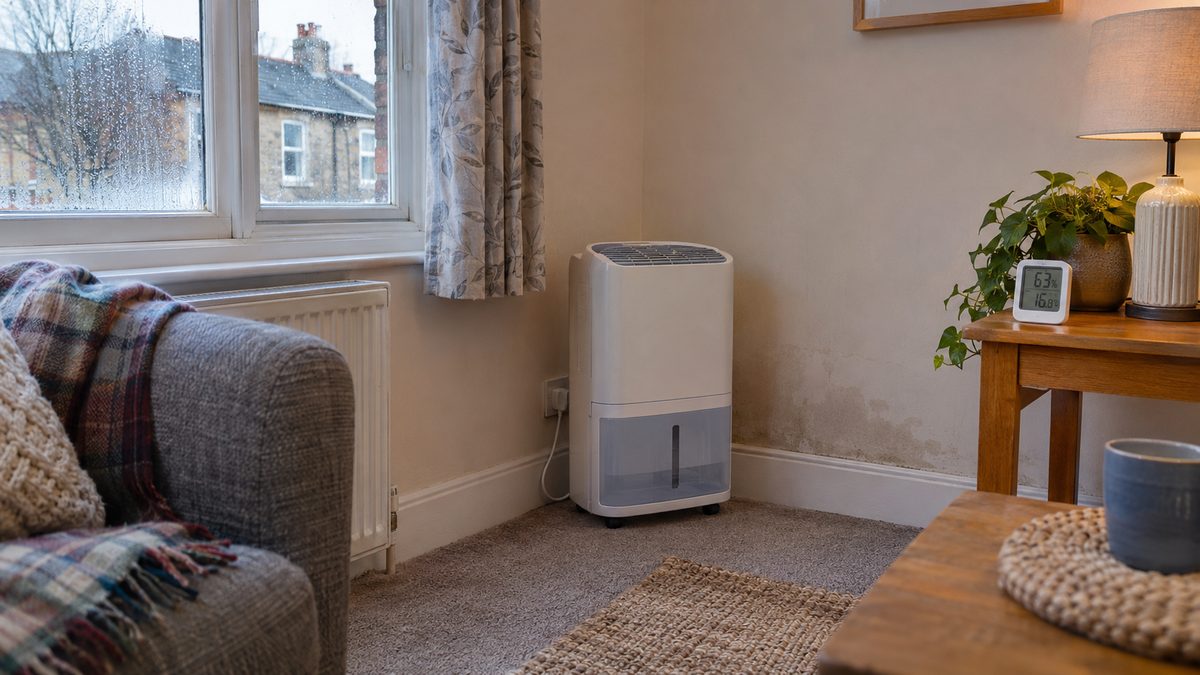
A dehumidifier takes moisture out of the air, which helps stop condensation forming on windows and walls and makes it harder for mould to grow. For condensation-driven mould, which is the most common kind in UK homes, it is one of the most effective tools you can run. It will not repair a leaking roof, a failed damp-proof course or a broken gutter, and it does not kill existing mould. Think of it as damage control while the real cause is fixed, or as ongoing protection in a home that is hard to keep dry. For a model to suit a damp room, see our best dehumidifier for mould and damp comparison, or read our reviews of the Meaco Arete One 12L and the Pro Breeze 20L compressor.
The humidity level to aim for
Mould grows more easily when indoor humidity stays above about 60%. Aim for 40-60% relative humidity, with around 50% a comfortable target. A cheap hygrometer will tell you where a room really is. In a bedroom, see our best dehumidifier for bedroom picks, and for where to place the unit, read our guide on where to put a dehumidifier.
Ready to compare models? See our best dehumidifier for mould and damp comparison →
Frequently asked questions
Does Awaab's Law apply to private landlords?
Not yet. In England it applies to social landlords (councils and housing associations) from 27 October 2025. The government intends to extend it to private rented homes, but secondary legislation is still needed and no start date has been confirmed. Private tenants are still covered by the Homes (Fitness for Human Habitation) Act 2018 and by council powers under the HHSRS.
How long does a landlord have to fix damp and mould?
Under Awaab's Law for social housing, a landlord must investigate significant damp or mould within 10 working days of being told, give the tenant a written summary within 3 working days of the investigation, and make the home safe within 5 working days of the investigation concluding. Emergency hazards must be dealt with within 24 hours. Any further work to fix the cause should start within 5 working days where possible, and no later than 12 weeks.
What diseases can mould cause?
Mould is not a single disease, but breathing in spores can cause cough and wheeze, allergic reactions, asthma attacks and airway infections. Children, older people, pregnant women and people with asthma, allergies, other lung or heart conditions or a weakened immune system are at higher risk. See your GP if you have breathing problems you think are linked to mould.
Can I withhold rent because of damp and mould?
Do not stop paying rent without legal advice, because you could risk eviction. Report the problem in writing, keep evidence, and contact your council's environmental health team or a housing charity such as Shelter, which can explain your options.
Will a dehumidifier get rid of mould?
No. A dehumidifier lowers humidity so mould struggles to grow and spread, but it does not remove mould that is already there. Clean visible mould with a suitable cleaner and fix the cause of the moisture, such as a leak or poor ventilation.
Is mould my fault if I dry clothes indoors?
Drying clothes indoors adds a lot of moisture to a home, but government health guidance says advice to tenants must never replace addressing the underlying causes. A landlord must look at the real cause, such as ventilation, heating, insulation and building defects. Using a dehumidifier or a vented space for drying laundry helps reduce the moisture.
Sources and further reading
- GOV.UK — Awaab's Law in the social rented sector (guidance collection)
- GOV.UK — Awaab's Law Phase 2: guidance for social landlords
- GOV.UK — Awaab's Law: guidance for tenants in social housing
- GOV.UK — understanding and addressing the health risks of damp and mould
- Legislation.gov.uk — Homes (Fitness for Human Habitation) Act 2018