In stockEcoAir DD1 Simple MK3 Desiccant Dehumidifier Review
The EcoAir DD1 Simple MK3 is a compact desiccant dehumidifier built for exactly the situation most compressor units struggle with: cold spaces. If you're trying to stop condensation and black mould in a garage, static caravan or unheated spare room over a British winter, this is the type of machine to look at first.
Our verdict: The dehumidifier to buy specifically for a cold garage, shed, caravan or unheated outbuilding where compressor models lose their edge — not our first pick for a warm living room, where a compressor unit is more efficient.
Pros
- ✓ Genuinely keeps extracting moisture in the cold — desiccant technology doesn't lose efficiency below 15°C the way a compressor unit does, so it works properly in an unheated garage, shed or caravan
- ✓ One of the quietest units on the whole site at 34dB(A), quiet enough to sit in a bedroom overnight
- ✓ Light at 6kg with a carry handle — easy to move between rooms, unlike most 15kg+ compressor models
- ✓ 3-year warranty, a year or two longer than most budget compressor dehumidifiers offer
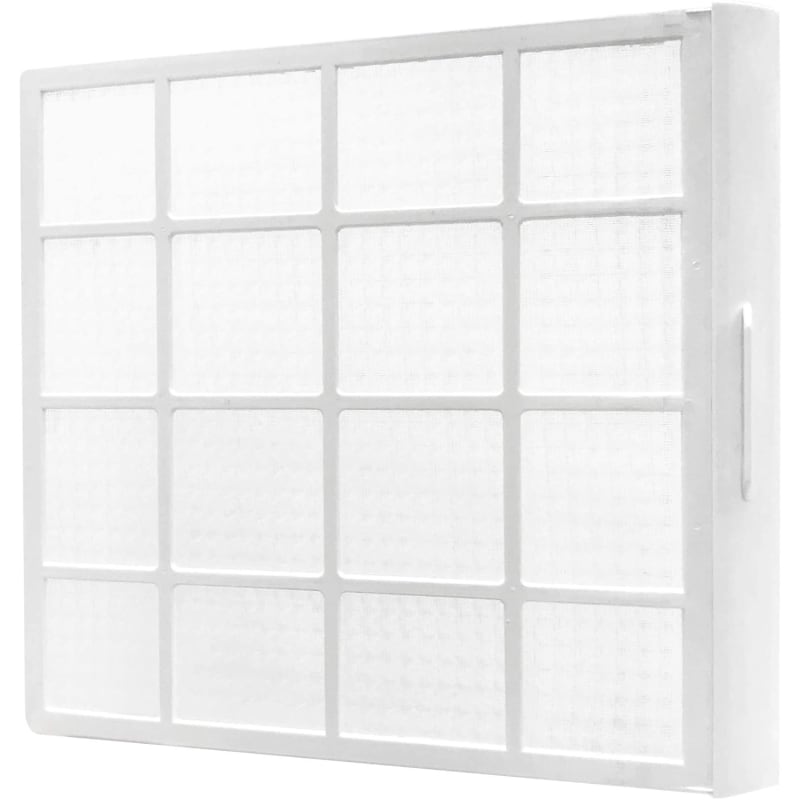
- ✓ Anti-bacterial filter fitted as standard, helping reduce airborne mould spores and dust as air passes through
- ✓ Continuous drainage hose included, so it can run unattended for days without emptying the tank
Cons
- ✕ The 2-litre tank is small relative to a 7.5L/day extraction rate, so at full output it can need emptying more than once a day
- ✕ Control is a single rotary dial with no digital humidistat or auto shut-off at a target humidity level
- ✕ Extraction slows down in a warm room above about 20°C, where a compressor model like the Meaco Arete Two will out-perform it
Full specifications
About EcoAir
EcoAir has specialised in desiccant dehumidifiers for the UK market for years, and the DD1 Simple MK3 sits at the entry point of its range — a compact, rotary-dial unit aimed at buyers who want reliable moisture extraction without app control, smart timers or a large price tag. It's built around a desiccant rotor rather than a refrigerant/compressor system, which is the key difference that defines what it's good at.
A compressor dehumidifier works by chilling air below its dew point to condense the moisture out, which is why performance drops sharply once room temperature falls below roughly 10-15°C — the coils can't get cold enough to be efficient, and some models won't extract at all. A desiccant dehumidifier instead pulls air through a rotating wheel coated in a moisture-absorbing material, then dries that wheel with a heater — a process that keeps working at temperatures as low as 1°C. That's the whole reason the DD1 exists: for garages, sheds, caravans, static homes and cold spare rooms, it's often the only appliance in this comparison that will actually do the job through winter.
That cold-weather performance is also why the DD1 turns up in searches for a dehumidifier for a static caravan left over winter or a crawl space dehumidifier, both situations where mains power is available but heating isn't. EcoAir's own guidance is blunt about the trade-off: buy a compressor unit for a heated house, buy a desiccant unit like this one for anywhere the temperature regularly drops below about 15°C.
How to use it
For a cold garage or outbuilding, run the DD1 continuously through autumn and winter rather than switching it on and off — desiccant units are designed for steady background operation and the 300-580W power draw scales with how hard it's working, so it isn't running at full power all the time. Position it away from walls so air can circulate freely on all sides, and connect the included drain hose if there's a nearby outlet or drain, since the small 2-litre tank fills quickly at full extraction.
In a static caravan or motorhome left over winter, the DD1 is a common choice specifically because mains-powered compressor units are often unreliable once the ambient temperature drops — this is one of the situations UK buyers search for by name ("dehumidifier for caravan", "dehumidifier for garage"). Run it on a low shelf or the floor, never directly on soft furnishings, and check the tank every day or two if the hose isn't connected.
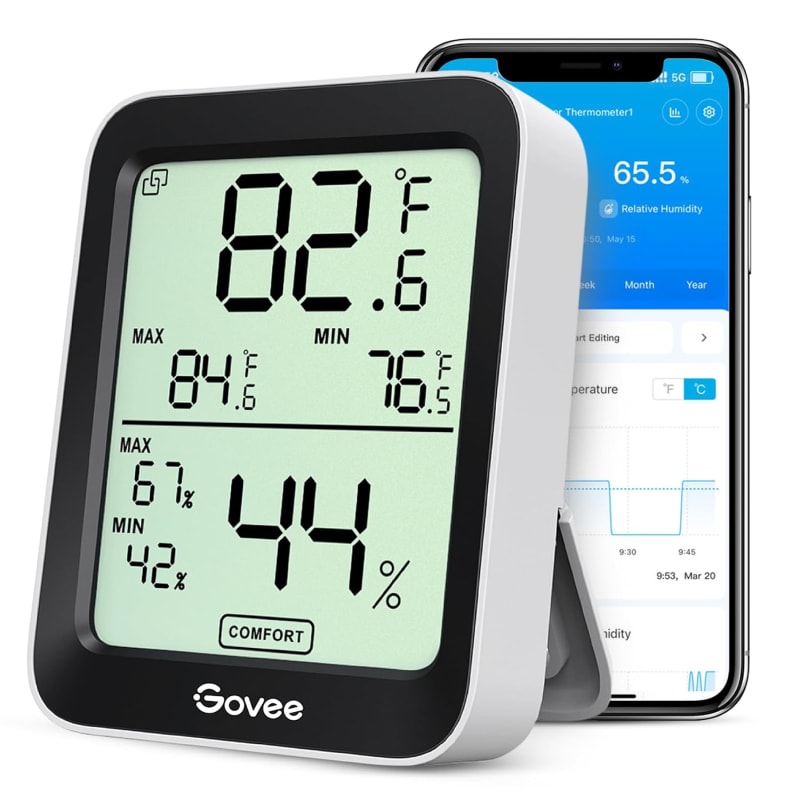
For mould and condensation on windows or in a cold spare bedroom, position the unit a short distance from the affected wall or window rather than pressed against it, and leave the door slightly open if the room is small so it can pull in air from the rest of the house. Because there's no humidistat, you'll need to judge by eye or with a separate hygrometer when the air feels dry enough to switch off, rather than relying on the unit to stop itself.
One detail worth planning around before you buy: because there's no humidistat, the DD1 won't switch itself off once a target humidity is reached the way a Meaco or Bosch compressor model will. In a space you visit only occasionally — a garage or static caravan — that means either running it on a plug-in timer, connecting the drain hose so overflow isn't a risk, or accepting that you'll need to check on it periodically rather than leaving it fully unattended for weeks.
One more practical point for a static caravan or seasonal outbuilding: because the unit relies on mains power and has no battery backup, plan for how it'll be powered if the space doesn't have a permanent electricity supply — a extension lead from the house or a caravan's own hook-up is usually the simplest solution, run via a timer if you can't check on it daily.
Frequently asked questions
Will this work in an unheated garage in winter?+
Yes — that's specifically what desiccant technology is designed for. Unlike a compressor dehumidifier, which loses efficiency below about 10-15°C, the DD1's desiccant wheel keeps extracting moisture down to 1°C, making it one of the few sensible options for an unheated garage or outbuilding.
Is it quiet enough to run overnight in a bedroom?+
Yes, at 34dB(A) it's one of the quietest units we've tested, comparable to a quiet library. It doesn't have a dedicated night mode because it doesn't need one — the noise level barely changes between low and high power settings.
How often do I need to empty the tank?+
The tank holds 2 litres, which is small relative to the 7.5L/day extraction rate. In a genuinely damp space running at full output, expect to empty it once or twice a day unless you connect the included continuous drainage hose to a nearby drain.
Desiccant vs compressor — which should I actually buy?+
As a rule of thumb: choose desiccant (like this EcoAir) for cold, unheated spaces — garages, sheds, caravans, cellars below about 15°C. Choose compressor (like the Meaco or Pro Breeze models) for warm, heated rooms, where they extract more litres per kWh of electricity used.
Does it have a humidistat or auto shut-off?+
No — control is a simple rotary dial for low/high power, with no digital display or target-humidity setting. If you want the unit to stop automatically once a room reaches a set humidity level, look at a compressor model with a built-in humidistat instead.
How much does it cost to run?+
It draws 300W on low and 580W on high, roughly in line with a compressor dehumidifier of similar capacity, though desiccant units typically use somewhat more energy than a compressor model when both are run in a warm room — the trade-off is that this one still works when a compressor unit wouldn't.
Can I use it in a crawl space or under-floor void?+
Yes, this is a common use case for desiccant dehumidifiers — the DD1's tolerance for cold, low-airflow spaces makes it a reasonable option for a crawl space, provided there's a power supply and enough clearance around the unit for air to circulate.
Does it heat the room up while it runs?+
Slightly — like all desiccant dehumidifiers, the DD1's drying process involves a heater element, so it releases a small amount of warmth into the room as it works, unlike a compressor unit which has a negligible heating effect. In a cold garage this is a minor bonus rather than a downside.
Should you buy it?
Buy the EcoAir DD1 Simple MK3 if your main problem is a cold garage, shed, caravan or unheated room where a standard compressor dehumidifier struggles to perform — that's the scenario this desiccant design is built for, and few other models on this site handle it as well. If you're dealing with a warm, heated bedroom or living room instead, a compressor model like the Meaco Arete One 12L will extract more moisture per kWh and give you humidistat control the DD1 doesn't have. If you specifically want a larger desiccant unit with a bigger tank, the Meaco DD8L is the step up.
Check price on Amazon.co.uk — £179.99Alternatives worth comparing
In stockMeaco DD8L Desiccant Dehumidifier
The Meaco to buy for a cold, unheated space — a conservatory, garage, boat or caravan — where a compressor unit like the Arete range loses effectiveness. Noticeably better reviewed than Meaco's own DD8L Pro, at a lower price.
In stockPro Breeze 12L/Day Dehumidifier with Automatic Humidity Sensor
The best-value small-to-mid dehumidifier on Amazon.co.uk — a genuine Which? Best Buy winner with an unusually large, consistently positive review base, at a price well below the equivalent 20L models on this site.
Explore more dehumidifier guides
11 dehumidifiers compared · Amazon.co.uk prices checked August 2026
EcoAir DD1 Simple MK3 Desiccant Dehumidifier
£179.99