Best Desiccant Dehumidifier UK (2026)
The best desiccant dehumidifiers for cold garages, conservatories, outbuildings and chilly rooms, where a compressor model stops working well.
On this page▾
Filter
Price
£179.99 – £265
Brand

Meaco DD8L Desiccant Dehumidifier
The Meaco to buy for a cold, unheated space — a conservatory, garage, boat or caravan — where a compressor unit like the Arete range loses effectiveness. Noticeably better reviewed than Meaco's own DD8L Pro, at a lower price.

EcoAir DD1 Simple MK3 Desiccant Dehumidifier
The dehumidifier to buy specifically for a cold garage, shed, caravan or unheated outbuilding where compressor models lose their edge — not our first pick for a warm living room, where a compressor unit is more efficient.
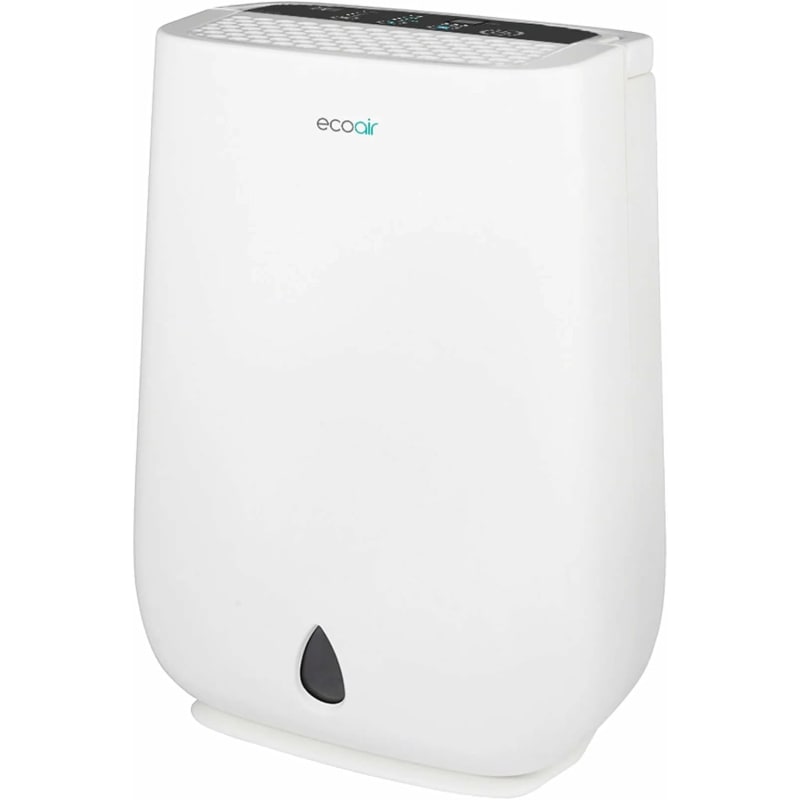
EcoAir DD3 Classic MK3 Desiccant Dehumidifier
A quiet desiccant dehumidifier with a digital humidistat that keeps working in cold rooms, best for a garage, conservatory, cold bedroom or a winter damp problem where a compressor unit gives up.

Meaco DD8L Pro Desiccant Dehumidifier
The best Meaco for cold rooms, garages and heavy laundry use: desiccant technology, an automatic louvre and app control, at the cost of higher electricity use than a compressor.
Best Desiccant Dehumidifier UK: the short list
- Top rated: Meaco DD8L Desiccant Dehumidifier (4.6/5).
- Most extraction: EcoAir DD3 Classic MK3 Desiccant Dehumidifier (Around 10.5 litres/day (marketed as 11L)).
- For cold rooms below about 10°C: Meaco DD8L Desiccant Dehumidifier, a desiccant model.
- Size the unit to the room, and check the tank size against how often you are willing to empty it.
| Model | Type | Capacity | Tank | Noise | Rating |
|---|---|---|---|---|---|
| Meaco DD8L Desiccant Dehumidifier | Desiccant | 8 litres/day | 2 litres | 39 dB(A) | 4.6/5 |
| EcoAir DD1 Simple MK3 Desiccant Dehumidifier | Desiccant | 7.5 litres/day (rated at low temperature) | 2 litres | 34 dB(A) | 4.6/5 |
| EcoAir DD3 Classic MK3 Desiccant Dehumidifier | Desiccant | Around 10.5 litres/day (marketed as 11L) | 4.2 litres, with cover | 36 dBA | 4.6/5 |
| Meaco DD8L Pro Desiccant Dehumidifier | Desiccant | Up to 8 litres/day at 20°C and 60% humidity (fan speed 3) | 2 litres | From 40 dB(A) | 4.5/5 |
How a desiccant dehumidifier works
A desiccant dehumidifier pulls room air through a slowly turning wheel (a rotor) coated with a moisture-absorbing material. The wheel soaks up water vapour from the air, then a heater dries out one part of the wheel and sends that moisture to the tank as water. There is no cold coil, so there is nothing to freeze up when the room is cold.
That is the whole reason to choose one. A compressor model, which is what most UK homes use, pulls water out by chilling the air on a cold coil, and it loses much of its effectiveness as a room gets cold, and many models struggle at around 10-15°C and below. A desiccant unit keeps working at low temperatures: the Meaco DD8L Pro is rated to operate from 1°C and still extracts 6.9 litres a day at 10°C, and the EcoAir DD1 Simple MK3 has an operating range of 1°C to 35°C.
When a desiccant model is the better choice
Pick a desiccant model if the space you need to dry is cold or unheated for much of the autumn and winter: a garage, a conservatory, a shed or outbuilding, a caravan or boat, a spare room with no heating, or a north-facing bedroom that stays cold. In these places a compressor unit can stop collecting much water at all. See our guide on desiccant vs compressor dehumidifiers for the full comparison.
There is a trade-off. Desiccant units use more electricity per litre in a warm room and blow out warm, dry air, which is a bonus in a cold room and a drawback in a warm one. The EcoAir DD3 draws 420 W and the DD8L Pro up to about 620 W at its top fan speed, while a compressor dehumidifier of similar size typically uses far less. For a normal heated living room or bedroom, a compressor model is usually the cheaper way to run. Our best dehumidifier UK comparison covers both types.
How the four desiccant models compare
Meaco DD8L is the simple, well-reviewed option: 8 litres a day, a 2-litre tank, 39 dB(A) and a continuous drainage option. It is a little louder than Meaco's compressor range, so it suits a garage or conservatory better than a bedroom. See the Meaco DD8L review.
Meaco DD8L Pro adds Wi-Fi app control, Alexa and Google voice control, an automatic louvre and a Smart Laundry mode, with a 3-year warranty. It is the one to choose for heavy laundry drying or a cold room you want to control remotely. Read the Meaco DD8L Pro review.
EcoAir DD1 Simple MK3 is the compact, quiet one: 7.5 litres a day, 34 dB(A), 6 kg with a carry handle and a 3-year warranty. It has a single dial and no digital humidistat, so it suits a garage, caravan or small outbuilding. Read the EcoAir DD1 review.
EcoAir DD3 Classic MK3 is the larger, more controllable choice: around 10.5 litres a day, a 4.2-litre tank, 36 dBA and a digital hygrometer with five presets from 40% to 60% relative humidity. It is quiet enough for a bedroom and suits a conservatory or cold winter damp problem. Read the EcoAir DD3 review.
How to choose: noise, capacity, control and portability
Use these points to narrow the four models down to the one that suits your space.
Noise. The EcoAir DD1 Simple MK3 is the quietest at 34 dB(A), followed by the EcoAir DD3 Classic MK3 at 36 dBA. The Meaco DD8L is 39 dB(A) and the DD8L Pro starts from 40 dB(A), so those two are better in a garage, conservatory or utility room than next to a bed.
Capacity. The EcoAir DD3 extracts around 10.5 litres a day and has the biggest tank at 4.2 litres. The Meaco DD8L and DD8L Pro are rated at up to 8 litres a day, and the DD1 at 7.5 litres a day, rated at low temperature. Manufacturers rate capacity under set conditions, so real extraction in a cold room is lower than the headline figure; the DD8L Pro quotes 6.9 litres a day at 10°C.
Controls. The EcoAir DD3 has a digital hygrometer with five presets from 40% to 60% relative humidity and timers. The Meaco DD8L Pro adds Wi-Fi, Alexa and Google control. The DD1 has a single rotary dial with no digital humidistat, so it runs until you turn it off or the tank fills.
Weight and portability. The DD1 weighs 6 kg with a carry handle and the DD8L 6.4 kg, so they move easily between rooms. The DD3 is 8.5 kg and the DD8L Pro 8.7 kg.
Warranty. The EcoAir DD1 and the Meaco DD8L Pro have 3-year warranties and the DD8L has 2 years. The EcoAir DD3 varies between 2 and 3 years depending on the version, so check the listing before buying.
Getting the best from a desiccant dehumidifier
Because most desiccant tanks are small (2 litres on the DD8L and DD1), a full tank can switch the unit off in a damp space. Set up continuous drainage with a hose to a drain or outside if the room is used rarely, such as a garage or outbuilding.
Keep doors and windows closed while it runs, and aim for 40-60% relative humidity. A cheap hygrometer will show whether the room is actually improving; our guide on how to measure humidity in a room explains how. For where to place the unit, see where to put a dehumidifier.
What a desiccant dehumidifier costs to run
A desiccant unit uses a heater to dry its wheel, so it draws more power than a compressor unit of similar size. The EcoAir DD1 draws 300 W on low and 580 W on high, the DD3 420 W, and the Meaco DD8L Pro up to about 620 W at its top fan speed. Because that heat ends up in the room as warm air, part of the energy is not wasted in a cold space.
Your cost depends on your tariff and how many hours you run it. Our dehumidifier running cost guide shows how to work out the cost per hour and per day with your own electricity price. In a cold garage or conservatory where a compressor would not collect much water, a desiccant model is often the only type that works at all.
Common mistakes to avoid
Buying a desiccant unit for a warm living room. A compressor model is usually cheaper to run there. Save the desiccant type for cold or unheated spaces.
Ignoring the small tank. A 2-litre tank can fill in a few hours in a damp space and switch the unit off. Use continuous drainage where you can.
Leaving doors and windows open. The unit then dries the whole outdoors. Keep the space closed while it runs.
Not checking humidity. Without a hygrometer you cannot tell whether it is working. Aim for 40-60% relative humidity.
Frequently asked questions
Is a desiccant dehumidifier better than a compressor?
Not always. A desiccant model keeps working in cold rooms, down to about 1°C on models like the Meaco DD8L Pro and EcoAir DD1, while a compressor model loses effectiveness below roughly 10°C. In a warm, heated room a compressor model is usually cheaper to run.
Are desiccant dehumidifiers expensive to run?
They use more electricity per litre than a compressor model in a warm room. For example the EcoAir DD3 draws 420 W and the Meaco DD8L Pro up to about 620 W at its top fan speed. The warm, dry air they blow out is a benefit in a cold room.
Will a desiccant dehumidifier work in a garage?
Yes, that is one of their best uses. They keep extracting water in cold, unheated spaces. Because tanks are small, set up continuous drainage if you will not empty it often.
Are desiccant dehumidifiers quiet?
Several are. The EcoAir DD1 runs at 34 dB(A) and the DD3 at 36 dBA, quiet enough for a bedroom, while the Meaco DD8L is 39 dB(A) and better suited to a garage or conservatory.
Can I use a desiccant dehumidifier in a bedroom?
Yes, if it is quiet and your bedroom is cold. The EcoAir DD1 (34 dB(A)) and DD3 (36 dBA) are the quietest of the four. The warm air they give out also takes the edge off a chilly room.
Is a desiccant dehumidifier good for a caravan or boat?
It is one of the best choices because caravans and boats are cold and unheated in winter. The EcoAir DD1 is compact at 6 kg with a carry handle and works from 1°C, but check the power supply available before running it.
Sources and further reading
Related buying guides
Explore more dehumidifier guides
31 dehumidifiers compared · Amazon.co.uk prices checked November 2026