Best Large Dehumidifier UK (20L+) (2026)
For a big open-plan space, a 3-4 bedroom house, or a persistently damp room a smaller unit can't keep up with, here are the highest-capacity models we've sourced and verified — what 20L+ actually buys you over a 12L unit, and which one fits your situation.
On this page▾
Filter
Price
£144 – £315
Brand

Devola DVHA20L 20L/Day Hybrid Dehumidifier & Air Purifier
The best choice if you want a single machine that tackles damp and cleans the air at the same time — genuinely useful in a home with allergies, pets, or a room that also collects cooking odours, not just a marketing bundle of two gadgets in one box.

Ebac 2650E 18 Litre Dehumidifier with Air Purification and Laundry Mode
The dehumidifier to buy if you specifically want a British-made unit built to last well over a decade, and don't mind paying a premium and giving up app control to get it.

Dreo 20L/Day Smart Dehumidifier
A compact, quiet 20 litre smart dehumidifier with app scheduling and a laundry mode, best for a bedroom, home office or flat where noise and tidy design matter as much as raw extraction.

Pro Breeze 20L OmniDry WiFi Dehumidifier
The best value 20L dehumidifier for drying laundry and general damp control — a genuine Which? Best Buy winner that undercuts the Meaco Arete Two on price without giving up much capability.

Meaco MeacoDry Arete One 20L
A quiet, well-built 20L model with Meaco's 5-year warranty and a HEPA filter, and the best fit for a family home that wants a long-lasting, set-and-forget dehumidifier without paying for Wi-Fi.

Pro Breeze 20L/Day Compressor Dehumidifier (PB-D-23)
A well-equipped 20 litre compressor dehumidifier with a big tank, a carbon filter and a Which? Best Buy listing, best for a living room, utility room or damp family home where capacity and value matter more than silence.

Meaco MeacoDry Arete Two 20L
The best all-round dehumidifier for a UK home battling condensation, damp or slow-drying laundry. If budget allows, this is the one we'd buy first.

Russell Hobbs RHDH2002 20 Litre Dehumidifier
The best value 20-litre dehumidifier in this comparison — strong extraction power for a noticeably lower price, at the cost of running louder than the premium alternatives, so it's better suited to a living room, kitchen or utility room than a bedroom.

Pro Breeze 40L OmniDry WiFi Dehumidifier
A powerful 40 litre smart dehumidifier with app control, hose drainage and castors, best for a large open-plan space, a whole-house damp problem or heavy indoor laundry drying.

NETTA 20L Dehumidifier
A compact, efficient 20 litre dehumidifier with simple touch controls and a sleep mode at a mid-range price, best for laundry, a damp living room or a hallway where you want capacity without paying premium-brand prices.
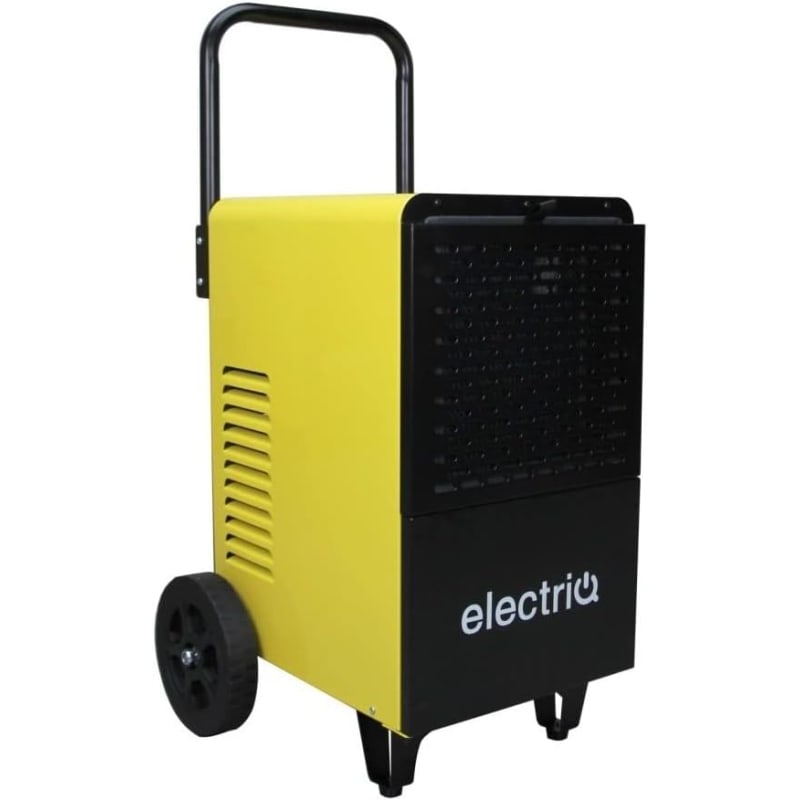
electriQ 30L Industrial Dehumidifier
The obvious choice once a 20-litre domestic dehumidifier isn't enough — built for a whole house, basement or building site rather than a single room.

Pro Breeze 20L/Day Smart Dehumidifier
A feature-packed 20L compressor with Wi-Fi control, a large tank and a drain hose at a lower price than Meaco, best for a living room, utility room or garage where noise matters less than capacity.

Dimplex EverDri 20L Dehumidifier
A conventional 20L-class dehumidifier with a clear humidistat and comfort light, from a brand most UK buyers recognise — fine for a large room, but check the real-world capacity and the small tank before you buy.
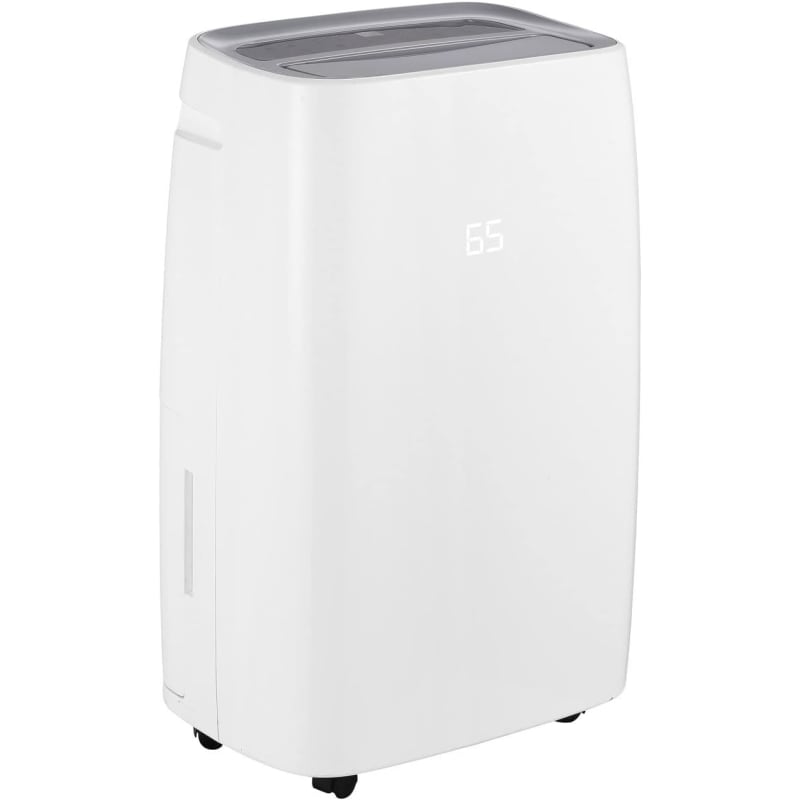
electriQ 40L Smart Laundry Dehumidifier
The biggest capacity in this comparison on paper, but currently out of stock — worth checking back if a whole-house or commercial space needs more than the 30L electriQ Industrial can cover.
Best Large Dehumidifier UK (20L+): the short list
- Top rated: Devola DVHA20L 20L/Day Hybrid Dehumidifier & Air Purifier (4.7/5).
- Most extraction: Pro Breeze 40L OmniDry WiFi Dehumidifier (40 litres/day).
- Size the unit to the room, and check the tank size against how often you are willing to empty it.
| Model | Type | Capacity | Tank | Noise | Rating |
|---|---|---|---|---|---|
| Devola DVHA20L 20L/Day Hybrid Dehumidifier & Air Purifier | Compressor | 20 litres/day | 2.89 litres | — | 4.7/5 |
| Ebac 2650E 18 Litre Dehumidifier with Air Purification and Laundry Mode | Compressor | 18 litres/day | — | — | 4.6/5 |
| Dreo 20L/Day Smart Dehumidifier | Compressor | 20 litres/day | 3.4 litres | 38 dB sound pressure (50 dB… | 4.6/5 |
| Pro Breeze 20L OmniDry WiFi Dehumidifier | Compressor | 20 litres/day | 4 litres | Under 38 dB(A) | 4.5/5 |
| Meaco MeacoDry Arete One 20L | Compressor | 20 litres/day (rated at 30°C, 80% humidity) | 4.8 litres | 40 dB(A) on the lowest… | 4.5/5 |
| Pro Breeze 20L/Day Compressor Dehumidifier (PB-D-23) | Compressor | 20 litres/day | 5.5 litres, auto shut-off when full | — | 4.5/5 |
| Meaco MeacoDry Arete Two 20L | Compressor | 20 litres/day | 4.8 litres | 38 / 40 / 50 dB(A) across 3… | 4.4/5 |
| Russell Hobbs RHDH2002 20 Litre Dehumidifier | Compressor | 20 litres/day | 3 litres | Approx. 47.5 dB(A) | 4.4/5 |
| Pro Breeze 40L OmniDry WiFi Dehumidifier | Compressor | 40 litres/day | 5.3 litres | Below 49 dB | 4.4/5 |
| NETTA 20L Dehumidifier | Compressor | 20 litres/day | 4.5 litres, auto shut-off when full | — | 4.4/5 |
| electriQ 30L Industrial Dehumidifier | Compressor | 30 litres/day | 7 litres | — | 4.3/5 |
| Pro Breeze 20L/Day Smart Dehumidifier | Compressor | 20 litres/day | 5.5 litres | 42-48 dB(A) depending on… | 4.3/5 |
| Dimplex EverDri 20L Dehumidifier | Compressor | 20 litres/day (at 30°C and 80% RH) | 3 litres | 42-46 dB (varies by listing) | 4.0/5 |
| electriQ 40L Smart Laundry Dehumidifier | Compressor | 40 litres/day | 6 litres | — | 4.2/5 |
What 20L+ actually buys you over a smaller unit
The litres/day figure on a dehumidifier is a lab-measured extraction rate, not a room size guide by itself — but it does scale directly with how much air a unit can process, and that's what matters once a room gets big enough. Meaco's own sizing guide, echoed by every brand compared on this site, puts a 10-12L/day unit in the flat-or-1-3-bedroom bracket and steps up to 18-20L/day for a 3-4 bedroom house or a genuinely damp property. Beyond that — a large open-plan kitchen-diner, a whole ground floor treated from one central position, or a persistently damp house that a 12L unit never quite keeps on top of — a large unit isn't a luxury upgrade, it's the difference between a room that reaches target humidity and one that doesn't.
The four models we've sourced and verified in this bracket — the Meaco Arete Two 20L, Pro Breeze 20L OmniDry, Russell Hobbs RHDH2002 20L and Ebac 2650E (18L) — cover a genuine spread of price, features and warranty, not just the same unit with a different badge. What they share is the physical capacity to bring a bigger volume of air down to target humidity faster than a 12L model doing the same job, which matters most when speed or a large area is the actual problem, not just "some" dampness in a small room.
The four large units we've compared, model by model
Meaco Arete Two 20L — the flagship of Meaco's range and the one UK reviewers point to first for a large space, sitting at the premium end of this comparison on price. 20L/day extraction, a smart humidity sensor that idles once target is hit, Wi-Fi/Alexa/Google Home control, and a 5-year parts-and-labour warranty that's the longest of the four compared here. At 38dB on its lowest speed it's also the quietest of the 20L compressor units, worth weighing if the large space in question is anywhere near a bedroom.
Pro Breeze 20L OmniDry — a Which? Best Buy winner (April 2025) and the clear value pick among the 20L units, undercutting the Meaco meaningfully for the same rated extraction. It matches the Arete Two on Wi-Fi/Alexa/Google Home control and stays under 38dB, but drops to a 1-year warranty, the shortest of the four.
Russell Hobbs RHDH2002 20L — the cheapest 20L unit in this comparison, with a smart timer but no app or Wi-Fi. At approximately 47.5dB it's noticeably louder than the Meaco or Pro Breeze on their lowest settings — a reasonable trade for a large utility room or garage-adjacent space, less so for an open-plan living area used daily. Warranty is 1 year, extendable to 2 with free registration.
Ebac 2650E — the most expensive of the four, 18L/day rather than a full 20L, but the only model in this bracket built around Intelligent Defrost down to 3°C — a genuine advantage if the large space in question is a cold hallway, integral garage or unheated extension rather than a normally-heated room. Smart Technology auto on/off sensing, an 8-hour laundry boost and an air purification mode round out the spec, against a shorter 2-year warranty and no Wi-Fi control.
Signs a smaller unit isn't enough
A 12L unit runs almost continuously without the room ever quite feeling dry. If a smaller dehumidifier's tank is filling every few hours and the humidity reading never settles at target, the problem is often capacity rather than a faulty unit — the room is generating or holding more moisture than a 12L model can keep pace with.
You're treating an open-plan space rather than a single closed room. A kitchen-diner, a knocked-through living room, or any space where air isn't contained by a closed door needs more raw extraction capacity to make a noticeable difference, since the effective air volume being treated is larger than the floor plan of any one "room" suggests.
Condensation keeps returning within a day of the room drying out. In a persistently damp property — older solid-wall construction, poor ventilation, a history of penetrating damp — a smaller unit may bring the reading down temporarily only for it to climb straight back up; a higher-capacity unit clears the same excess moisture faster and holds the target more reliably against a room that keeps generating fresh dampness.
You're drying laundry and managing general damp from the same unit. Laundry mode is a genuinely intensive moisture load on top of a room's baseline humidity — a 20L-class unit handles both jobs from one machine considerably more comfortably than a 12L model asked to do double duty.
What a large unit actually costs to run
A bigger dehumidifier does draw more power at full tilt than a smaller one — but the practical cost difference is smaller than the capacity jump suggests, because a smart humidity sensor cycles the unit down well before it's been running 24 hours flat-out. The Meaco Arete Two runs at roughly 5p/hour, the Pro Breeze 20L OmniDry at roughly 7p/hour — both figures based on the units' own published estimates at current UK electricity rates, and both apply only while the compressor is actively running, not for the full time the unit is switched on.
Over a full UK autumn-to-winter stretch of fairly regular use, a 20L-class unit run in Smart Humidity mode rather than continuously typically lands somewhere in the £15-£35 range in electricity across the season — noticeably more than a 12L unit doing lighter duty in a single room, but a modest cost set against the extraction capacity that actually solves a large-space or persistently-damp problem a smaller unit can't. The Ebac 2650E's Smart Technology is pitched specifically at this trade-off, with Ebac's own figure of up to £50/year saved versus running the same unit continuously without auto-sensing.
How to choose between them
Room size and layout first. For a single large room — an open-plan kitchen-diner, a big living room — any of the four 20L-class units will do the job; the differentiator becomes warranty, noise and smart features rather than raw capacity. For a whole floor or house treated from one central position, factor in that air needs to circulate through open doors to reach the unit — a large capacity doesn't fix poor air circulation between rooms.
Warranty as a proxy for expected lifespan. The Meaco Arete Two's 5-year cover is double the next best in this group and a genuine signal of the manufacturer's own confidence in the unit surviving years of the more demanding, higher-hours use a large space typically puts it through.
Noise, if the space is lived in. The Meaco Arete Two and Pro Breeze 20L OmniDry both sit under 38dB on their lowest speed; the Russell Hobbs RHDH2002 at roughly 47.5dB is noticeably more noticeable in a room you spend time in, though it's less of a factor in a utility room, garage-adjacent space or somewhere you're not sitting next to it for hours.
Temperature of the space. If the large area in question is a cold conservatory, garage-adjacent utility room or unheated extension rather than a normally-heated room, the Ebac 2650E's Intelligent Defrost (rated to 3°C) is doing real work the other three compressor units in this comparison can't match — see our dedicated dehumidifier for garage comparison if the space is genuinely unheated year-round, where a desiccant model may suit better still.
Budget. The Pro Breeze 20L OmniDry matches the Meaco Arete Two on extraction rate and smart features for noticeably less, at the cost of warranty length — for most buyers not planning to keep the unit a full 5 years, that trade is worth taking.
Meaco vs Pro Breeze vs Russell Hobbs vs Ebac — the large-capacity picture
Meaco vs Pro Breeze at this capacity plays out exactly as it does across the rest of the range: Meaco wins on warranty and brand reputation, Pro Breeze wins on price for near-identical extraction and smart features. At the 20L tier specifically, the price gap between the two is wider in absolute terms than at 12L, which tips the calculation further toward Pro Breeze unless the longer warranty is a priority.
Russell Hobbs undercuts both on price but gives up smart connectivity and runs meaningfully louder — the right choice specifically when budget is the deciding factor and the space isn't one where noise or app control matter, such as a utility room or workshop.
Ebac is the outlier of the four: slightly lower rated capacity (18L vs 20L) but the only one engineered for genuinely cold conditions. It's not a straight upgrade or downgrade against the other three — it's the right pick specifically when the large space is also a cold one, and the wrong pick if it's a normally-heated room where the other three's Wi-Fi control and lower price matter more.
Getting the most out of a large-capacity unit
Position centrally, not against a wall. A 20L-class unit is designed to draw air in from a wider radius than a 12L model — pushing it into a corner or behind furniture restricts the volume of air it can actually process per hour, undercutting the extra capacity you've paid for. Aim for at least 15-20cm of clearance on the intake side, and a central position within the space if the layout allows it.
Leave interior doors open if one unit is covering more than a single room. Air needs a path to circulate back to the dehumidifier — a large unit in a hallway or landing with bedroom doors left ajar treats a meaningfully bigger effective volume than the same unit in a fully closed room, though it will always work fastest and most thoroughly in the single room it's actually placed in.
Connect a continuous drain for anything beyond occasional use. All four models compared here support continuous drainage, and a 4-6L tank on a unit extracting 15-20L a day in a genuinely damp space fills faster than most people expect — a drain hose routed to a nearby outlet keeps the unit running uninterrupted rather than pausing every few hours to be emptied by hand.
What buyers of large-capacity units say
Across verified Amazon.co.uk reviews for all four models, the most consistent theme specific to large-room use is how quickly the room-wide effect becomes noticeable compared with a smaller unit — several reviewers moving up from a 12L model specifically mention the difference in how fast a big room stops feeling muggy. The Meaco Arete Two draws the most repeated praise for quiet operation at this capacity, which reviewers frequently contrast with louder 20L units they'd previously owned.
The most repeated criticism across the group, again specific to large-space use, is tank capacity relative to how much moisture a big damp room produces — even a 4-6L tank fills faster than expected in a genuinely damp large space, and several reviewers across all four models note that a continuous drain hose (supported on all four) becomes close to essential rather than optional once the room is big enough. The Russell Hobbs's noise level is the other consistently repeated point, generally framed as an acceptable trade for its lower price rather than a surprise defect.
Which large dehumidifier should you buy
If you want the longest warranty and the quietest operation at this capacity, the Meaco Arete Two 20L is the strongest all-round pick, and the one we'd default to without a specific reason to choose otherwise.
If budget is the deciding factor, the Pro Breeze 20L OmniDry matches it on extraction and smart features for noticeably less, trading down to a 1-year warranty.
If price is the only priority and noise/app control don't matter, the Russell Hobbs RHDH2002 is the cheapest 20L unit in this comparison.
If the large space is cold or unheated, the Ebac 2650E is the only one of the four built to keep working there — see our full dehumidifier for garage comparison if the space is genuinely unheated year-round. For every model we've sourced across every capacity, see the full best dehumidifier UK comparison.
Frequently asked questions
What counts as a large dehumidifier?+
In the UK market, 18-20L/day and above is generally considered large — the bracket Meaco's own sizing guide puts against 3-4 bedroom houses or particularly damp properties, as opposed to 10-12L/day for a flat or single room.
Do I need a large dehumidifier, or is 12L enough?+
If you're treating a single bedroom or a flat, a 12L unit like the Meaco Arete One is correctly sized and cheaper to buy and run. Step up to a 20L-class unit if you're covering a large open-plan space, a whole house from one position, or a persistently damp property where a 12L model never quite keeps up.
Is a bigger dehumidifier always better?+
No — an oversized unit in a small room simply idles sooner once it hits target humidity, which isn't harmful but means paying more upfront and for a larger unit than the space needs. Match capacity to room size rather than defaulting to the largest option available.
Which large dehumidifier is quietest?+
The Meaco Arete Two 20L and Pro Breeze 20L OmniDry both run under 38dB on their lowest speed. The Russell Hobbs RHDH2002 20L, at roughly 47.5dB, is noticeably louder — a reasonable trade for its lower price in a utility room or workshop, less so in a room you're sitting in.
Does a 20L dehumidifier cost much more to run than a 12L one?+
Running cost scales roughly with power draw rather than tank size — a 20L compressor unit typically costs a few pence more per hour than a 12L model at the same speed, but a smart humidity sensor (fitted to the Meaco Arete Two and Ebac 2650E) means it runs actively for only a fraction of the time it's switched on, keeping the gap smaller in practice than the capacity difference suggests.
Sources and further reading
Related searches
Large dehumidifier for a whole house UK — is one unit enough?
One large unit can make a dent on a whole house if interior doors are left open so air can circulate to it, but it works best positioned centrally — a landing or hallway rather than tucked in a single room. For a genuinely large property, two mid-size units in different zones often outperform one large unit trying to cover everything from a single position.
25L dehumidifier UK — is it worth going bigger than 20L?
Only for a particularly large or severely damp space — the jump from 20L to 25L rated extraction is a smaller practical difference than the jump from 12L to 20L, since real-world extraction in a normal UK room is well below the lab-rated figure either way. For most 3-4 bedroom houses, a 20L-class unit like the Meaco Arete Two already covers the job.
Related buying guides
Explore more dehumidifier guides
26 dehumidifiers compared · Amazon.co.uk prices checked October 2026